Picture a weekday that starts on a train platform, includes a few hours at a desk, and ends with a grocery bag in each hand. The shoe that looks good in the morning still has to feel acceptable when the trip home takes longer than planned. That is the useful starting point for an everyday sneaker purchase.
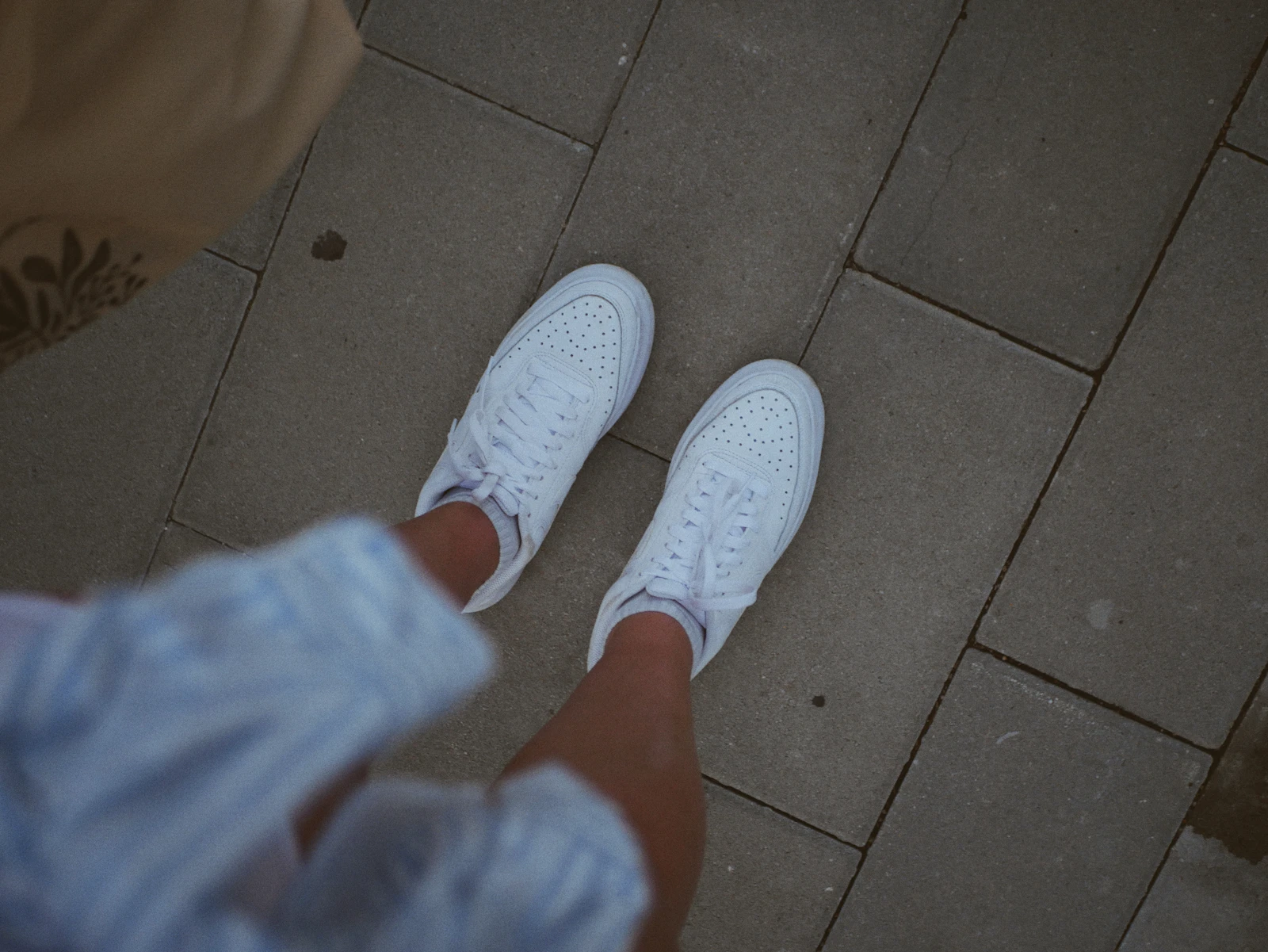
This is a fit-and-use buying guide, not a wear test. Our recommendations distinguish shoe types and use published manufacturer information for the named candidate. The photograph illustrates everyday footwear, not a particular recommended model.
Choose for your everyday.
Choose the pair that fits your real walking routine and existing clothes. A pleasing silhouette cannot compensate for heel movement, crowded toes, or a return policy that prevents a proper indoor try-on.
In this guide
Map the day before choosing the shoe
Write down where you walk, where you sit, and what you carry. A short pavement commute and a standing retail shift place different demands on the same casual shoe. Include your weather and any dress expectations at work. A light wool sneaker is a different proposition from a leather pair you intend to wipe clean after a wet journey.
Do not assume one pair has to cover exercise as well. If you already own a suitable training shoe, let your everyday pair solve the commute and social part of the day. Buying two distinct tools can make more sense than asking one casual design to handle every task.
Try the fit with your actual socks
Bring the sock thickness you usually wear, and try both shoes. Lace them as you would at the station rather than leaving them loose for a quick mirror check. Walk, turn, and use a few steps indoors if the store permits. Notice heel movement and whether your toes can sit naturally without pressing into the front.
Compare adjacent sizes or a different shape if something feels wrong. A size number is not a universal fit measurement, and a soft upper should not be an excuse to accept immediate pressure. Keep the packaging and follow the seller’s indoor-try-on rules until you have made the decision.
Match materials to maintenance
Ask how you will clean the shoe on a busy week. An upper with specific washing instructions needs a different routine from one you can wipe. Allbirds describes its Wool Runners as a Merino-wool casual design; that makes it a candidate to investigate when you want a soft-looking, understated everyday sneaker, rather than proof that it will fit your foot.
Read the current care page for the exact model and color before buying. Insoles, laces, upper and sole may need different treatment. If drying a washed pair would leave you without weekday footwear, plan a rotation instead of relying on a single pair.
Use your wardrobe as the color chart
Put the potential shoe beside the trousers and outerwear you already wear most often. Off-white, gray, brown and black each handle different wardrobes well; there is no single neutral that works best for everyone. Think about visible scuffs too. The color you can live with after a month is more useful than one that only works when immaculate.
Small branding and a simple profile can make a shoe easier to repeat across outfits, but minimal styling does not establish construction quality. Inspect stitching, lining and the join between upper and sole rather than treating a quiet logo as a quality guarantee.
Spend on the decision, not the promise
Set a ceiling before browsing. Above that ceiling, identify the specific benefit you would receive: a better fit, replaceable components, a material you prefer, or a useful service policy. A marketing story by itself does not answer the question. Discounted shoes are still expensive if their shape makes you avoid wearing them.
Before ordering, compare the official model page with the retailer’s exact variant and return terms. Keep your first outing indoors until you are satisfied. If your current sneakers remain comfortable and sound, cleaning them and replacing worn laces may be a better first move than buying another pair.
A choice for each kind of day
Use the scenario as your starting point. The right option solves your own inconvenience without adding a new one.
| Your option | Makes sense for | The tradeoff |
|---|---|---|
| Wool casual sneaker | A subdued look for ordinary dry-day wear | Care and weather suitability need checking |
| Leather casual sneaker | A pair you prefer to wipe clean | Upper stiffness and finish vary |
| Dedicated walking shoe | Days when fit and long walking outweigh styling | May look more technical with casual clothes |
Brands to put on your shortlist
These are starting points for your research, based on the brands’ published information. Check the exact version, dimensions, care instructions, delivery terms, and current price before ordering.
Wool Runners
A soft casual-shoe candidate
- Merino-wool upper
- Casual lace-up design
Why consider it: An option to compare for low-key everyday outfits
Keep in mind: Try the fit before committing; not a substitute for a specialized sports shoe
Explore at Allbirds ↗Brand website · Not an affiliate link · Details checked Nov 12, 2026Your before-you-buy checklist
- Try both shoes with everyday socks.
- Check return terms before wearing outside.
- Read model-specific cleaning guidance.
- Compare against two outfits you already own.
Before you decide
Are these recommendations based on a hands-on test?
No. This guide combines scenario-based buying advice with published product information. Personal fit remains the deciding check.
Should I size up for comfort?
Do not use a blanket rule. Compare sizes and shapes in person or through a returnable indoor trial; extra length can introduce heel movement.
Is a casual sneaker a running shoe?
Not automatically. Choose a shoe designed for your sport separately and follow the manufacturer’s intended-use guidance.
Sources & editorial notes
Brand information last checked Nov 12, 2026. Our scenario recommendations are editorial judgments, not laboratory results. Stock images illustrate everyday use and are not product verification.
See a detail that needs updating? Send a correction.