Sunday cooking can leave you feeling organized until Monday morning, when the right lid seems to belong to a container that is already at work. A useful storage system has less to do with owning many boxes than with owning a few shapes that match your meals.
Before choosing glass, plastic, or a large set, trace the route from the kitchen to the place you eat. The container must work in the fridge, the bag, the lunchroom, and the washing-up routine. This guide offers a buying framework rather than food-storage safety times or a product leak test.
Choose for your everyday.
Buy a small repeatable group of containers sized for your actual meals. Glass can suit food kept mostly at home; a lighter format may be easier for commuting. Check the exact model’s heat, lid, freezer, and transport instructions.
In this guide
Start with a lunch you already eat
A soup lunch, a sandwich, and a grain bowl need different shapes. Lay out one normal portion in a dish you own and estimate the useful footprint. A tall container may waste bag space around a flat sandwich, while a shallow box may be awkward for a meal that needs stirring.
Consider whether you carry separate ingredients. Keeping a dressing or topping apart can call for a small additional container, but every extra piece adds a lid to wash. The smallest workable system is easier to remember. Avoid adding compartments simply because they look tidy in a product photograph.
Follow the container through the whole day
Measure the fridge shelf with enough room to remove a box without rearranging everything. Then check your lunch bag and the shelf or drawer where clean containers will live. A stack that looks efficient when empty may be inconvenient when only one box is needed and the rest come tumbling out.
If lunch travels in a backpack, the closure matters as much as the body material. Read what the manufacturer actually says about transport and liquids; do not assume a clip-style lid is a universal leak guarantee. Carrying a container upright and separated from electronics is a sensible arrangement even when the closure looks substantial.
Choose material for the journey
Glass can be a practical option for leftovers that mostly stay in the home, but its carrying weight deserves attention. A lighter container can suit a walking commute or several boxes in one bag. Neither choice removes the need to follow model-specific instructions for reheating, washing, or changes in temperature.
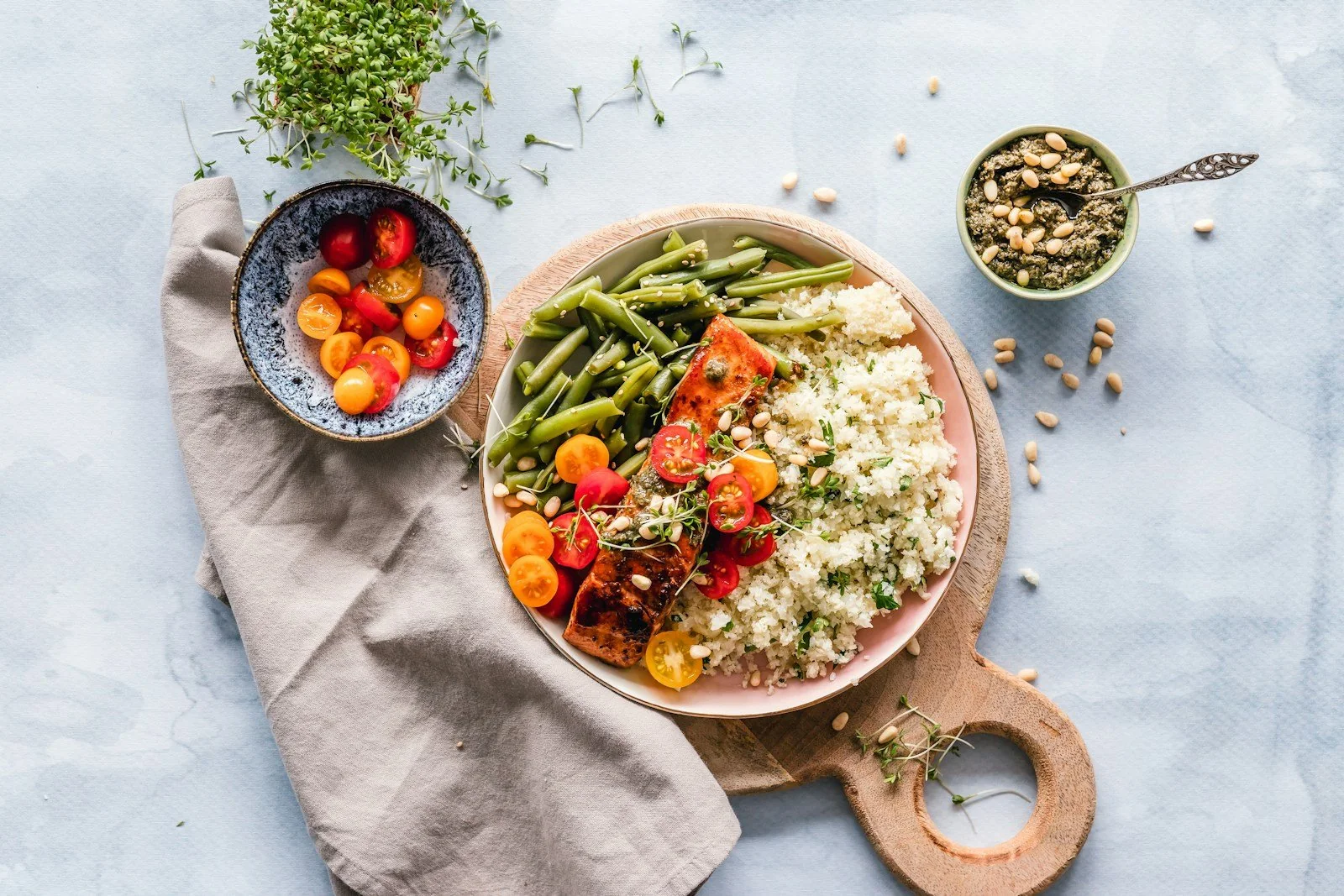
OXO’s food-storage collection includes Smart Seal glass formats and other storage families. Use the official listing to compare shapes, then open the precise model’s instructions before buying. A range name does not mean every lid and body can be treated identically, and the photograph here is a meal scene rather than evidence of a container test.
Standardize the pieces that get separated
A small number of repeated footprints can make lids easier to identify. Before purchasing a set, count containers rather than the advertised total pieces: a lid and base may each contribute to that number. Ask whether you actually need the smallest included size or several different circles.
Check whether replacements are sold separately and how the seller identifies compatible lids. A system can become frustrating when one missing piece makes a useful container awkward to use. Labeling the outside with your name may also be helpful in a shared office, provided it does not interfere with cleaning or the closure.
Plan for washing and putting away
Open the product’s care guidance and look for details about lids, seals, and any removable components. Think about how those parts will dry. A container that is pleasant to fill but difficult to reset becomes one more object left by the sink, defeating the reason for meal preparation.
Begin with enough containers for the cycle between cooking and washing, then add pieces after observing the bottleneck. You may need one spare lunch box rather than an enormous set. Keep food-safety decisions separate from shopping promises and consult authoritative food-safety guidance for storage and reheating practices.
A choice for each kind of day
Use the scenario as your starting point. The right option solves your own inconvenience without adding a new one.
| Your option | Makes sense for | The tradeoff |
|---|---|---|
| Glass container | Food kept mainly at home | More weight when carried |
| Lightweight lunch container | Walking or transit commutes | Check heat and liquid-transport limitations |
| Assorted large set | A household with several clear storage needs | May include awkward shapes and unmatched lids |
Brands to put on your shortlist
These are starting points for your research, based on the brands’ published information. Check the exact version, dimensions, care instructions, delivery terms, and current price before ordering.
OXO Smart Seal Glass Containers
Fridge organization Portioning cooked meals
- Glass food-storage range
- Round and rectangular options
Why consider it: Compare container shapes around your actual meals
Keep in mind: Glass adds carrying weight Care and lid instructions vary by model
Explore at OXO ↗Brand website · Not an affiliate link · Details checked Nov 12, 2026Your before-you-buy checklist
- Measure one normal meal and the bag it travels in.
- Count bases separately from lids in a set.
- Read heat, closure, and care instructions for the exact model.
- Check how spare lids or seals can be obtained.
Before you decide
Should every container have separate compartments?
Only when separation improves the food you actually pack. Simple boxes can be easier to wash and use for several purposes, while compartments suit some lunches very well.
Can I assume glass means oven safe?
No. Follow the exact manufacturer instructions for the body and lid, including temperature changes and exclusions. Appearance and material alone do not establish safe use.
How many boxes should I buy first?
Start with the number needed between cooking and washing, plus a practical spare if you regularly leave one at work. Expand after identifying a repeated shortage.
Sources & editorial notes
Brand information last checked Nov 12, 2026. Our scenario recommendations are editorial judgments, not laboratory results. Stock images illustrate everyday use and are not product verification.
See a detail that needs updating? Send a correction.