You get home carrying groceries, the umbrella is dripping, and your keys vanish into the same bag that needs repacking for tomorrow. A useful entryway earns its space at this exact moment. It needs somewhere for wet things, somewhere for small things, and a clear route into the house. Decorative symmetry comes later.
This guide is for apartments and compact houses where the front door opens into an ordinary room. The aim is a small, repeatable routine rather than a costly renovation. Our suggestions are based on storage design and published manufacturer information, not a claim that we have tested the products in your hallway.
Choose for your everyday.
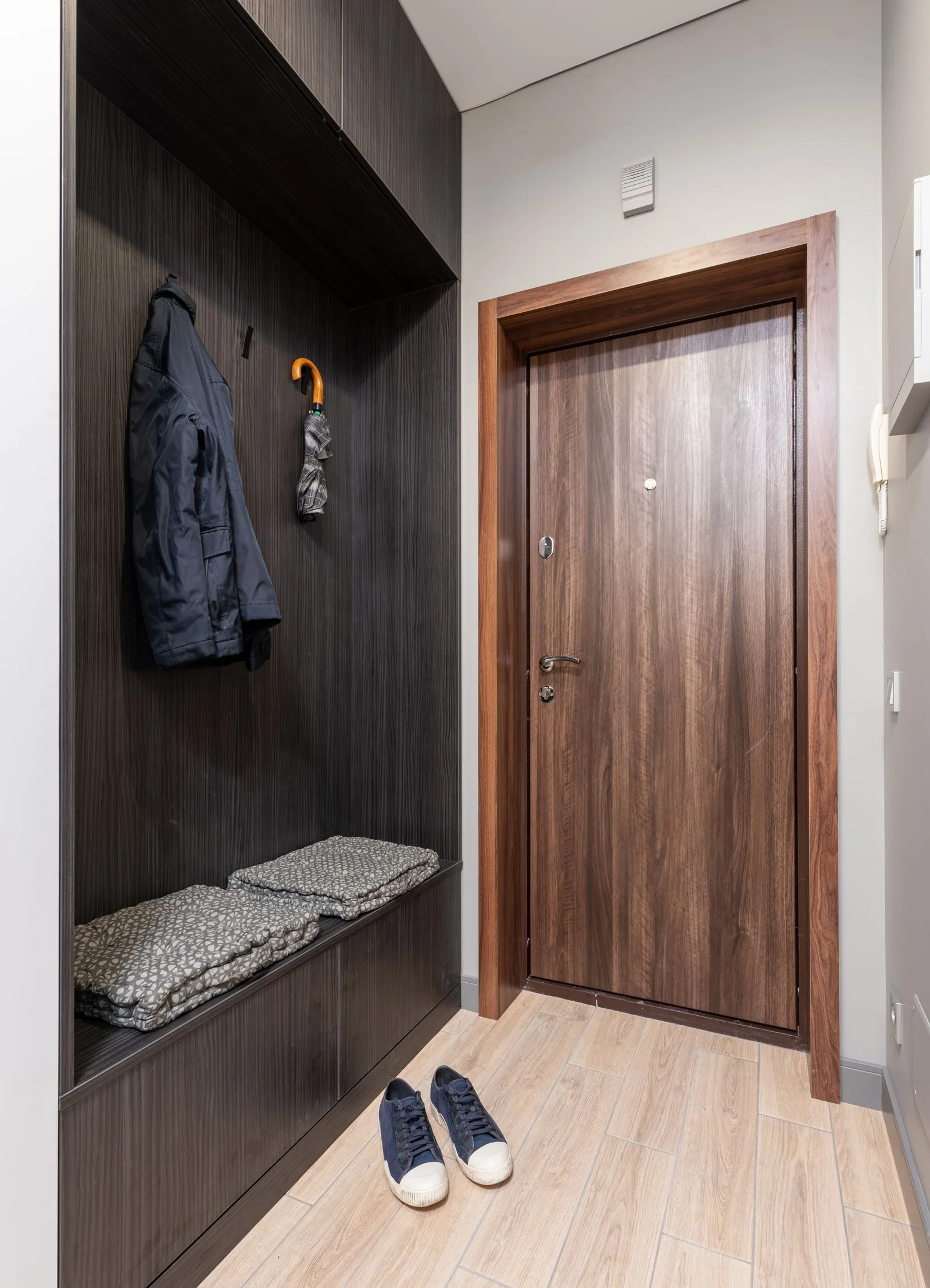
Start with a washable landing tray, one accessible bag hook, and a dedicated key dish. Add a narrow movable cart only if the door can still swing freely. A system you can use with one hand beats a larger cabinet that blocks the entrance.
In this guide
Map the arrival before buying storage
Walk through your actual arrival with your normal coat, work bag, and shopping. Notice where you naturally put each item. A tray across the room will not catch muddy shoes if you take them off at the threshold. Keep the key drop within reach of the place where the door closes, but away from outside reach through a letter slot or window.
Use painter's tape to mark any proposed furniture footprint. Open the door fully, carry a laundry basket past it, and check access to switches. Include the protrusion of handles and bags hanging from hooks. If furniture makes either movement awkward, choose a smaller surface or use an existing shelf.
Separate wet, daily, and occasional items
A boot tray or washable mat belongs at floor level. Let damp footwear dry according to its care instructions before enclosing it. A shallow dish handles keys and access cards; a small labeled basket handles items that need to leave with you tomorrow. Mixing all three into one deep bin recreates the search you were trying to eliminate.
Store only the shoes and outerwear currently in rotation here. Seasonal boots, spare bags, and sports equipment can live farther away. The entry becomes easier to maintain when it contains a working selection rather than the entire household inventory.
When a cart is more useful than a console
A utility cart such as IKEA's RÅSKOG is worth considering when you need flexible open storage rather than a fixed hallway table. The manufacturer's range includes wheeled carts; compare the exact version's dimensions and wheel instructions before ordering. Open tiers make a bag, reusable shopping totes, and a return parcel easy to see.
A cart also exposes clutter. Use a small container for loose objects and resist filling every tier. In a very narrow corridor, even a compact trolley may be too deep. A wall shelf can preserve floor space, provided your lease, wall construction, and suitable fixings allow it.
Buy for cleaning and attachment, not just appearance
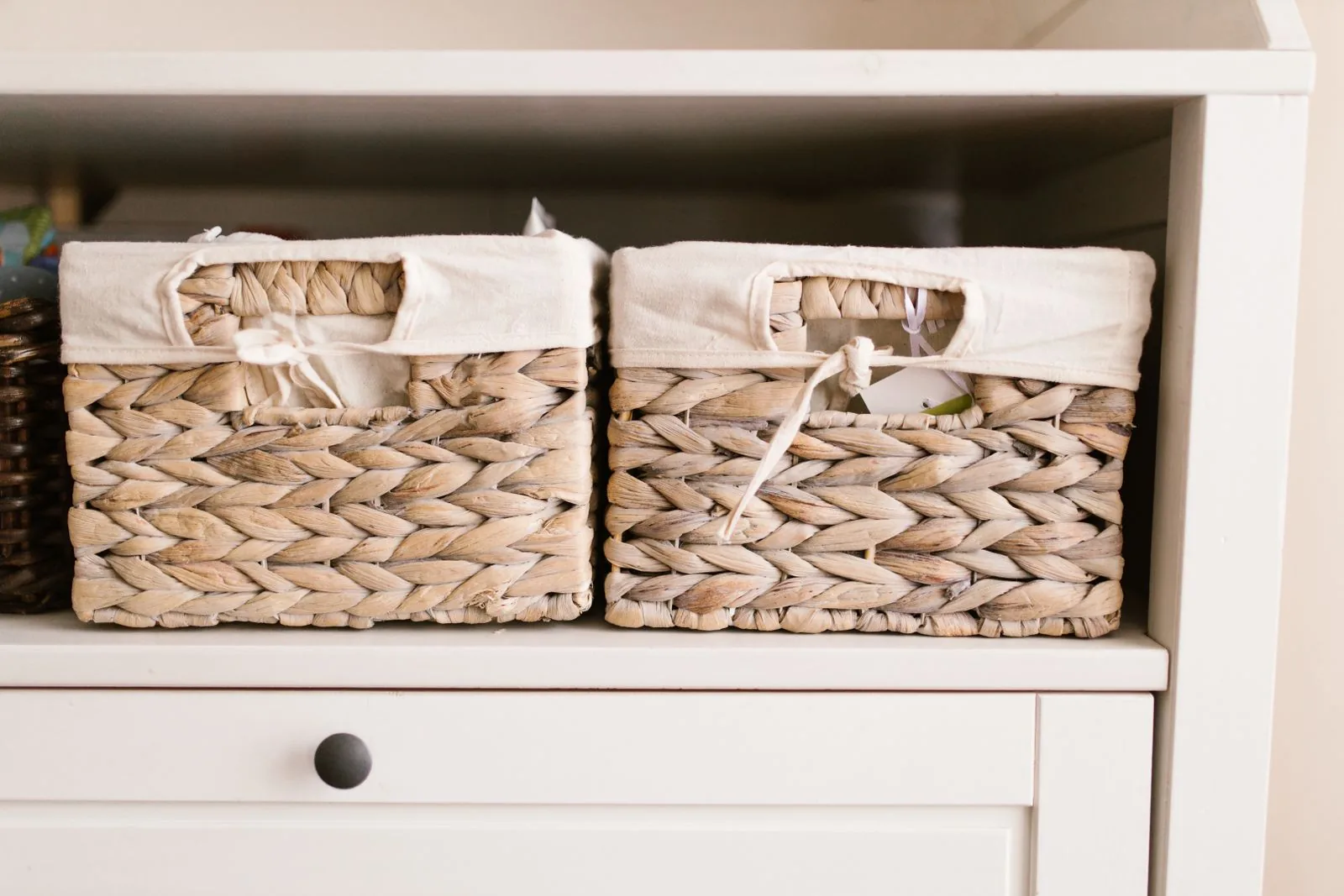
Choose surfaces that tolerate the cleaning they will actually receive. A delicate woven basket looks appealing but is an awkward place for damp umbrellas. A removable liner is useful for scarves; a wipeable tray makes more sense for shoes. Read material and cleaning instructions before deciding that every container should match.
Hooks require a separate decision. Do not assume an adhesive hook can carry a loaded commuter bag. Follow the hook maker's surface preparation and load guidance, and use appropriately installed hardware when needed. Keep anything heavy out of the path of children and pets.
The upgrade that can wait
A coordinated bench-and-cabinet set is unnecessary until you know that sitting down to put on shoes is a genuine need. Try a chair you already own first. Likewise, an elaborate key organizer adds little if a simple dish already works. Buy one piece, use the area for a week, and then decide what remains inconvenient.
Set a weekly reset: return spare shoes to their main storage, empty receipts, and move parcels that have been waiting too long. Organization products can define the landing space, but the decision to clear it is what keeps it useful.
A choice for each kind of day
Use the scenario as your starting point. The right option solves your own inconvenience without adding a new one.
| Your option | Makes sense for | The tradeoff |
|---|---|---|
| Tray + existing shelf | The smallest entrance and a limited budget | Little hidden storage; needs frequent clearing |
| Narrow utility cart | Renters who need flexible, visible storage | Requires floor clearance and tidy open shelves |
| Closed shoe cabinet | A wider hall with several daily shoe pairs | More expensive and may need wall anchoring |
Brands to put on your shortlist
These are starting points for your research, based on the brands’ published information. Check the exact version, dimensions, care instructions, delivery terms, and current price before ordering.
RÅSKOG Utility Cart
A movable landing spot Visible everyday supplies
- Wheeled utility cart
- Open tiered storage
Why consider it: Contents are visible Can move with a room's layout
Keep in mind: Needs floor clearance Open shelves expose clutter
Explore at IKEA ↗Brand website · Not an affiliate link · Details checked Nov 12, 2026Your before-you-buy checklist
- Measure with the door fully open and bags hanging.
- Choose a washable place for wet shoes.
- Keep keys away from external reach.
- Check all mounting and load instructions.
- Start with the daily items you actually carry.
Before you decide
Do I need a bench in a small entryway?
Only if sitting to put on footwear solves a real problem. Test the footprint with an existing chair; a seat that narrows the walking route may be a poor trade.
Can a storage cart hold wet shoes?
Use a suitable removable tray and check the manufacturer's care guidance. Do not let standing water sit against finishes or place wet footwear above clean fabrics.
Should everyone have a separate basket?
Separate baskets help when items routinely get mixed up. If space is tight, a clearly divided shallow tray can be easier to use than several oversized bins.
Sources & editorial notes
Brand information last checked Nov 12, 2026. Our scenario recommendations are editorial judgments, not laboratory results. Stock images illustrate everyday use and are not product verification.
See a detail that needs updating? Send a correction.