The living-room shelf looks tidy until somebody needs a charging cable. One deep basket holds chargers, batteries, instructions, and the remote nobody uses. The contents land on the floor, and the tidy system stops being useful. A good container should make putting an item away almost as easy as taking it out.
This guide compares open baskets, rigid boxes, and drawers for everyday home storage. The focus is ordinary mixed clutter: small electronics, craft supplies, spare linens, and paperwork. We draw on published product ranges and practical selection criteria, without claiming a hands-on comparison or a professional organizing service.
Choose for your everyday.
Use open baskets for soft, frequently handled items; shallow rigid boxes for small objects; and closed labeled storage for occasional supplies. Measure the usable shelf opening and the objects first. Matching every container is less useful than being able to find what is inside.
In this guide
Sort by retrieval, not by color
Group things that leave storage together. A sewing kit belongs with its needles and thread; tomorrow's lunch supplies do not belong with festive napkins just because they are the same color. Make the categories narrow enough that a container has a purpose you can explain in a few words.
Leave room for the next item. A box packed tightly to the rim is difficult to maintain because every return becomes a puzzle. If one category fills several large bins, review whether all of it needs to remain in prime storage. The shelf at hand height should serve the things you reach for most.
A basket is good at softness and speed
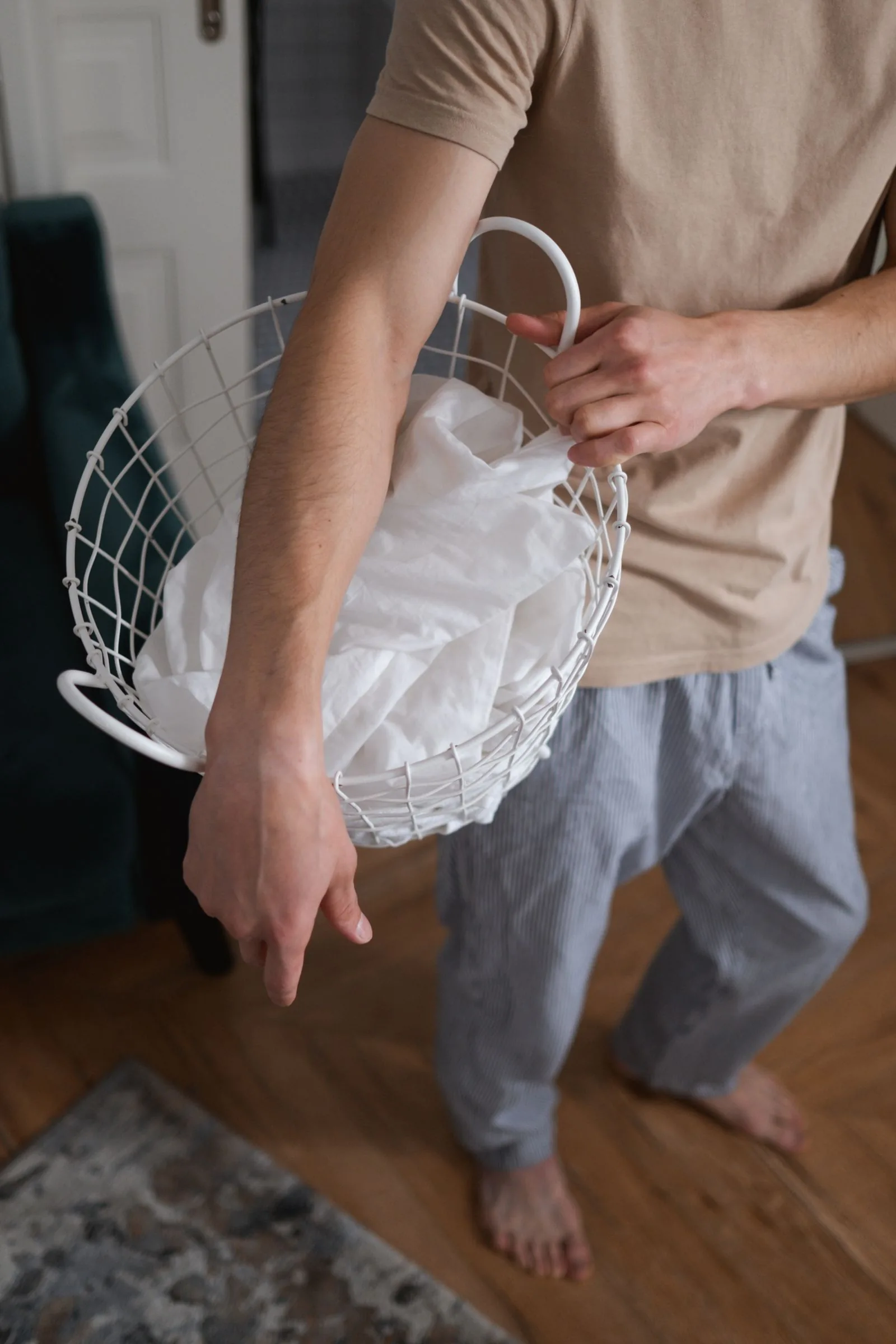
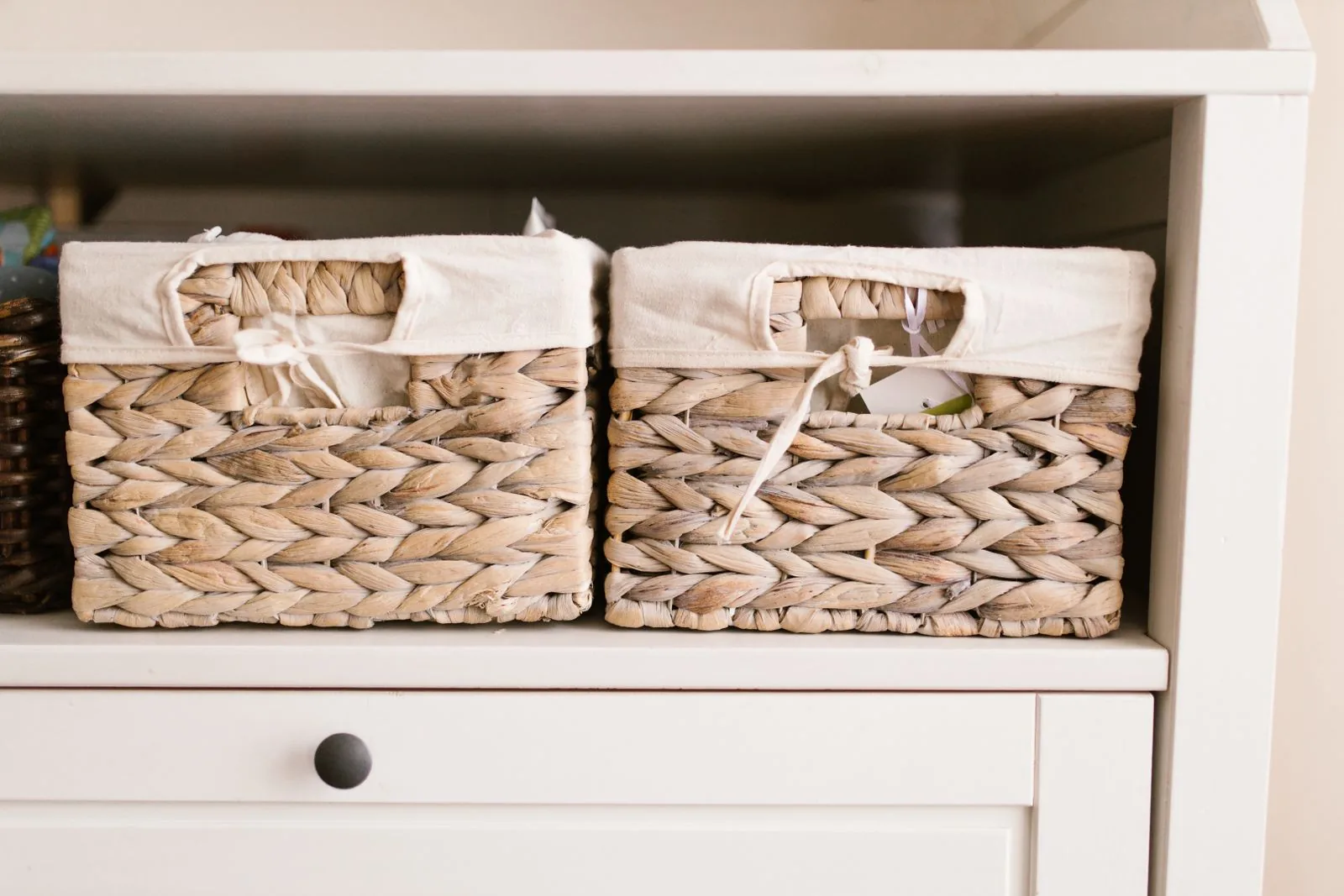
A flexible basket suits throws, scarves, and other soft items you can recognize from above. An open top removes a step from putting things away, which is useful in shared rooms. Handles help only when the basket can actually leave the shelf without catching on the opening.
Small components disappear into the weave or fall to the bottom. Add a suitable liner or choose a rigid shallow tray for those. In bathrooms and utility spaces, check whether the material tolerates dampness and cleaning. A decorative basket should not be assumed washable just because it looks natural.
Rigid boxes are for boundaries
A smooth-sided box can create a clear boundary for cables, stationery, or spare toiletries. MUJI's polypropylene storage collections are useful examples to compare because their ranges contain different shapes and formats. Read the particular item's external measurements and internal layout instead of assuming pieces will stack or nest together.
A lid keeps contents out of view but adds friction. That is acceptable for seasonal decorations and less convenient for the television remote. Transparent or translucent storage helps identify contents; opaque boxes look quieter but need labels. Choose visibility according to the category, rather than buying every box in one finish.
Measure the space you can really use
Measure the narrowest shelf opening, not simply the cabinet's advertised width. Hinges, doors, shelf supports, and a lip at the front can all interfere with access. Leave finger room above and beside the container. A bin that fills the opening perfectly may be impossible to lift with its contents inside.
Think about weight once full. Heavy books or tools can turn a handsome large basket into an awkward load. Smaller containers can be easier to carry and can keep a shelf from becoming a single heavy drawer. Follow both the storage item's and the shelving unit's load guidance.
Buy a trial unit before committing
Choose one container for the messiest, most frequently used category. Live with it for several ordinary days. Does everybody return things to it? Can the lid be opened without clearing another shelf? Are handles comfortable with the real load? Those answers are worth more than buying a coordinated set immediately.
Pay extra for a suitable material, accessible shape, or replaceable piece within a range. Do not pay extra merely for empty volume. More containers can postpone the decision about what belongs in the room. Good storage gives useful possessions a home; it does not make every possession useful.
A choice for each kind of day
Use the scenario as your starting point. The right option solves your own inconvenience without adding a new one.
| Your option | Makes sense for | The tradeoff |
|---|---|---|
| Open woven basket | Throws, scarves and quick everyday access | Small objects sink; cleaning may be limited |
| Shallow rigid box | Cables, craft supplies and small accessories | Must fit shelf and needs a clear category |
| Lidded labeled box | Occasional items and visually quiet shelves | Adds an opening step and can hide forgotten items |
Brands to put on your shortlist
These are starting points for your research, based on the brands’ published information. Check the exact version, dimensions, care instructions, delivery terms, and current price before ordering.
MUJI Polypropylene Storage
Shelf organization Separating everyday accessories
- Polypropylene storage collection
- Multiple drawer and container formats
Why consider it: Choice of shapes and sizes Translucent formats help identify contents
Keep in mind: Not every item stacks with every other Internal and external dimensions differ
Explore at MUJI ↗Brand website · Not an affiliate link · Details checked Nov 12, 2026Your before-you-buy checklist
- Group items by the activity they support.
- Measure the shelf's narrowest opening.
- Leave room for hands and a little future capacity.
- Check material care and shelf load guidance.
- Try one container before buying a matching set.
Before you decide
Are clear boxes better than opaque ones?
Clear boxes help when visual identification matters. Opaque boxes reduce visual clutter but need useful labels. The better choice depends on how frequently you retrieve the contents.
How do I store lots of charging cables?
Separate active cables from spares and group by connector or device. A shallow compartmented box is easier to scan than a deep basket full of loose leads.
Should all storage containers match?
A consistent color can help a room look calm, but the container still needs to fit its contents and shelf. Start with function and coordinate only where it does not compromise access.
Sources & editorial notes
Brand information last checked Nov 12, 2026. Our scenario recommendations are editorial judgments, not laboratory results. Stock images illustrate everyday use and are not product verification.
See a detail that needs updating? Send a correction.