Lunch in the park sounds simple until you reach the grass. The ground is damp, the breeze picks up, and the blanket you brought is good at exactly one of those problems. Separating a ground layer from a wrap makes outdoor-blanket shopping much easier.
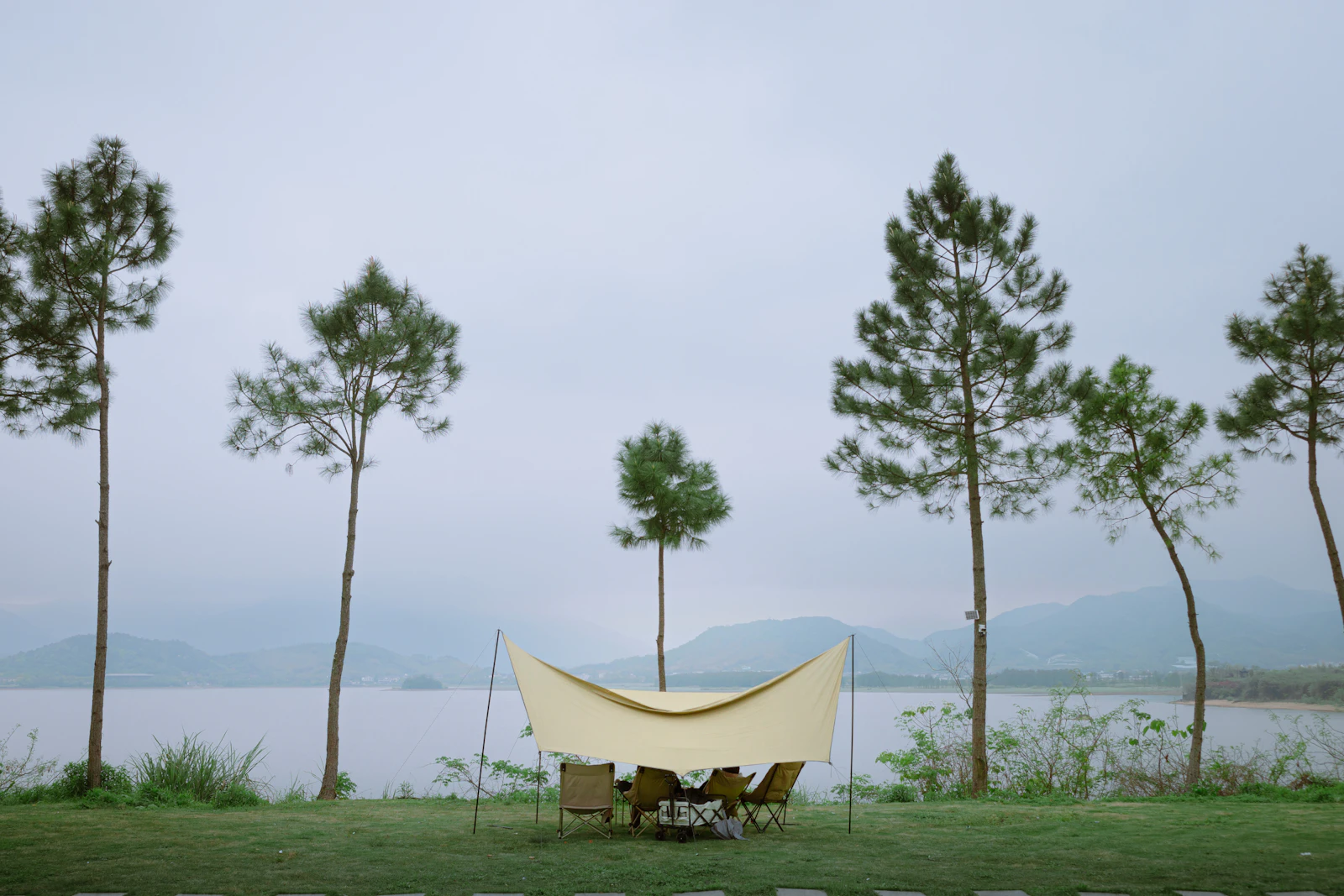
This guide compares use cases rather than claiming measured warmth or waterproof performance. A stock picnic scene illustrates the setting; the linked insulated blanket family is a research candidate, not a product pictured or tested here.
Choose for your everyday.
Choose a groundsheet for a clean, suitable surface to sit on and an insulated wrap for a cool seated break. If you need both functions, verify both explicitly or carry two simple layers.
In this guide
Name the main problem first
Is the blanket keeping crumbs off your clothes, separating you from damp grass, or wrapping around your shoulders as the sun goes down? Those jobs ask for different materials and construction. A soft indoor throw might be pleasant around your shoulders but inconvenient to clean after a muddy picnic.
Think about the place you visit most often. A dry paved courtyard, sandy beach and grassy park are different shopping briefs. Avoid choosing a blanket around an idealized camping weekend when its ordinary use will be a short lunch on the lawn near home.
Inspect the ground-facing layer
If ground moisture is the issue, read the exact product description for its intended ground use and any stated water resistance or waterproof construction. Do not treat a shiny underside as proof. Seams, edges and damage can matter as well as the main fabric.
Think about cleaning before folding it into a bag with lunch leftovers. A wipeable surface may suit your routine better than fabric that needs a separate wash. Check whether the ground-facing layer can fold inward so it does not transfer dirt to the surface you sit on next time.
Choose a wrap as a wrap
An insulated blanket can be useful for a seated break or an outdoor film when you want to cover shoulders and legs. Rumpl’s Original Puffy family is designed as an insulated outdoor blanket, making it relevant to that shortlist. This does not establish that every version is a waterproof picnic mat.
Read the current size and care details, and check how much body coverage you need while seated. An appealing pattern will not compensate for a blanket that barely covers your lap. Consider how it stays positioned in a breeze without relying on accessories you would rather leave at home.
Allow space for people and food
Lay out the intended footprint at home with a sheet or tape measure. Include the lunch containers, shoes kept beside the edge and the room each person actually uses. A stated person count is only a rough description; a picnic with bags and food needs different space from two people sitting closely.
If the blanket is mainly a wrap, measure for that purpose instead. A larger picnic footprint can become unwieldy around one seated person. The useful size is the one that fits the activity, the carrying bag and the washing facilities available afterward.
Pay for the feature you will repeat
A specialist outdoor blanket is easiest to justify when it repeatedly solves a real inconvenience. For occasional dry-weather outings, an existing washable throw and a suitable separate ground layer may be enough. Borrow or improvise a harmless size trial at home before buying a premium version.
Compare packed volume, care instructions and any stated limitations alongside the price. Let the blanket dry before storage and check local rules about where you can picnic. If the forecast is unsuitable for the outing, a more expensive blanket does not turn the plan into a good one.
A choice for each kind of day
Use the scenario as your starting point. The right option solves your own inconvenience without adding a new one.
| Your option | Makes sense for | The tradeoff |
|---|---|---|
| Groundsheet or picnic mat | Sitting and eating on suitable ground | May offer little wrap-around warmth |
| Insulated outdoor blanket | Covering shoulders or legs during a break | Not automatically a waterproof ground layer |
| Existing washable throw | Occasional dry-weather outings | May be bulky or harder to clean after outdoor use |
Brands to put on your shortlist
These are starting points for your research, based on the brands’ published information. Check the exact version, dimensions, care instructions, delivery terms, and current price before ordering.
Original Puffy Blanket
An insulated outdoor-blanket candidate
- Insulated outdoor blanket family
- Packable design
Why consider it: A candidate for wrapping up during outdoor breaks
Keep in mind: An insulated blanket is not automatically a waterproof groundsheet
Explore at Rumpl ↗Brand website · Not an affiliate link · Details checked Nov 12, 2026Your before-you-buy checklist
- Decide whether you need ground coverage or a wrap.
- Verify water-related claims for the exact product.
- Measure room for food as well as people.
- Check packed volume and drying instructions.
Before you decide
Is water-resistant the same as waterproof?
No. Read the manufacturer’s stated use and limitations for the exact product rather than treating those terms as interchangeable.
Can an insulated blanket replace a sleeping bag?
Do not assume so. Overnight equipment needs an appropriate, separately researched specification for the conditions.
What should I buy first?
Buy for the recurring problem. If damp ground regularly ends your picnic, solve that before buying a warmer shoulder wrap.
Sources & editorial notes
Brand information last checked Nov 12, 2026. Our scenario recommendations are editorial judgments, not laboratory results. Stock images illustrate everyday use and are not product verification.
See a detail that needs updating? Send a correction.